Can AI Really Grade Student Assignments?
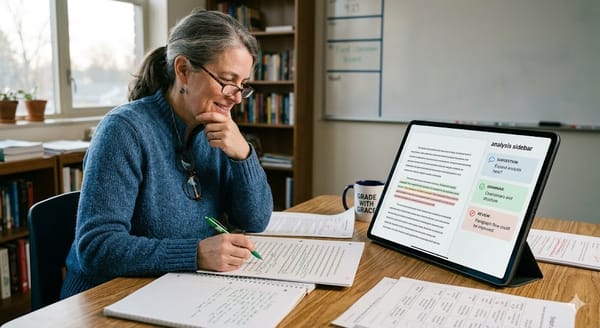
AI grading is real, and it's already being used by writing teachers to reduce repetitive work. But it comes with caveats worth understanding before you rely on it.
The short answer: AI works best as an assistant, not a replacement.
It can speed up parts of the grading process—especially the mechanical, pattern-based work—but it still needs a teacher to make the judgment calls that matter.
What AI Grading Can Actually Do
AI grading tools are good at spotting patterns and matching them against structured criteria.
They can:
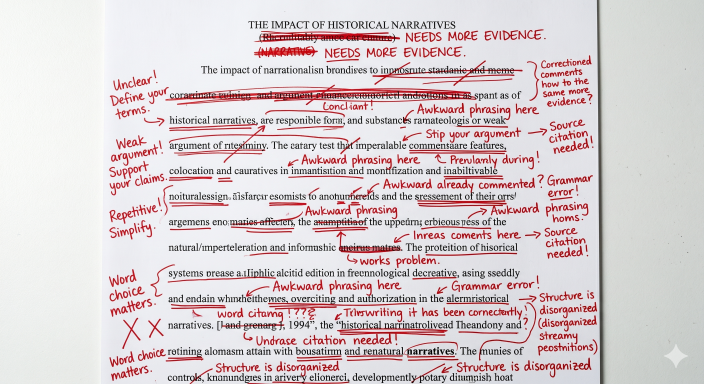
- Check for structural issues — missing thesis statements, weak topic sentences, unclear paragraphing
- Flag grammar and vocabulary errors — repetitive phrasing, awkward constructions, incorrect word forms
- Apply rubric criteria consistently — assess task response, coherence, lexical resource, and grammatical range without fatigue
- Identify common mistakes — off-topic responses, incomplete arguments, lack of examples
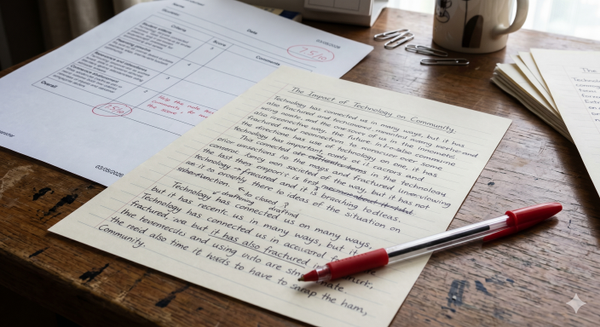
This kind of work is time-consuming when you're grading manually, especially across 30 or 40 essays. AI handles it quickly and consistently.
But consistency isn't the same as judgment.
What Teachers Still Need to Do
AI grading tools don't understand context the way teachers do.
They can't tell when:
- A student's argument is technically coherent but misses the nuance of the question
- An unusual phrasing is actually creative, not incorrect
- A lower band score reflects a bad day rather than genuine ability
- Feedback needs to be adjusted based on a student's learning stage or confidence level
AI also can't read tone, recognize improvement over time, or make the kind of empathetic decisions that help students stay motivated.
That's still teacher work.
The best AI grading tools don't try to replace that judgment—they just handle the repetitive parts so you can focus on the decisions that actually require your expertise.
Making AI Work for Your Classroom
If you're considering AI grading, treat it as a first-pass assistant, not a final authority.
Use it to:
- Speed up rubric application — let the tool flag issues and suggest scores, then adjust based on your judgment
- Reduce grading fatigue — offload the mechanical work so you're not exhausted by the time you reach essay 20
- Stay consistent — use AI to anchor your standards, especially when grading large batches
Don't use it to:
- Grade blindly — always review the AI's assessment before finalizing feedback
- Replace your teaching insight — students still need your perspective, not just algorithmic scoring
I built SyllabixMark because I kept seeing teachers burn out on repetitive grading work that didn't require their full expertise. The goal was never to remove the teacher—it was to give them their time back.
If you're grading IELTS or ESL writing assignments at scale, AI grading can help you stay consistent and reduce fatigue—but only if it keeps you in control.
SyllabixMark assesses essays against structured rubric criteria, flags issues, and suggests scores. You review, adjust, and finalize. The tool handles the repetitive work. You handle the judgment calls.
Try it free for 3 days and see if it fits your workflow.