AI Grading
Can AI Help Grade Writing Without Replacing Teacher Judgment?
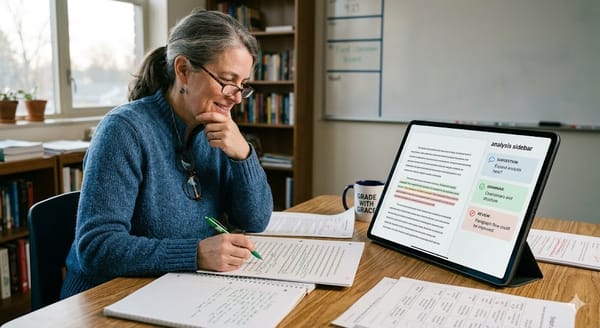
The real risk isn't AI replacing teachers. It's teachers gradually over-trusting AI output and deferring the interpretive work that defines good assessment.

AI Grading
The real risk isn't AI replacing teachers. It's teachers gradually over-trusting AI output and deferring the interpretive work that defines good assessment.
AI for teachers
Even experienced teachers score the same essay differently on different days. In test-prep contexts like IELTS or OET, this undermines progress tracking and teacher confidence. The issue isn't competence—it's rubric design.

AI for teachers
When student paragraphs feel scattered, the problem is rarely vocabulary or grammar; it's structure. This guide covers how to introduce it, common mistakes to watch for, and how to adapt it across IELTS, ESL, and academic writing contexts.
AI for teachers
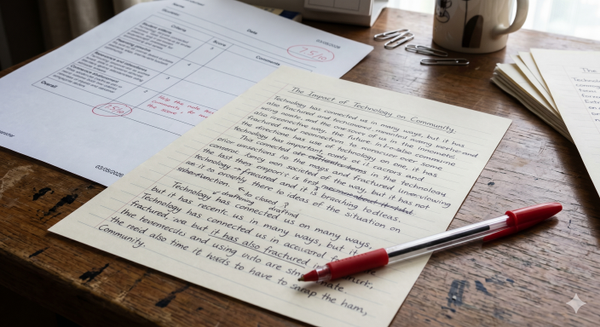
Many IELTS Task 2 essays sound fluent, well-structured, and confident, and still come back as Band 6. This guide breaks down where polished essays quietly lose points, and what to look for when diagnosing students who are stuck below Band 7.
AI for teachers
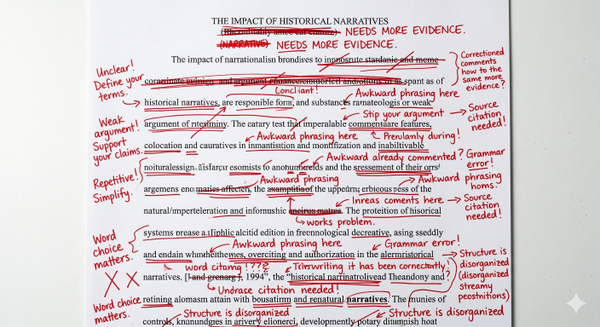
AI grading is real, and it's already being used by writing teachers to reduce repetitive work. But it comes with caveats worth understanding before you rely on it. The short answer: AI works best as an assistant, not a replacement. It can speed up parts of the grading

AI Grading
When an ESL essay has problems at every level, most teachers default to grammar. Research suggests that's usually the wrong place to start.

IELTS Writing
A practical method IELTS and ESL teachers can use to spot weak essay structure, diagnose coherence problems, and give clearer feedback without relying on vague comments like “improve organization.”